
Hikers may get the close inspection, but nobody covers more berry habitat in a day than a cyclist. Fifty kilometres of trail is fifty kilometres of sunny, disturbed edge: old rail grades, road shoulders, clearing margins. Which happens to be exactly where berries thrive. We ride through a buffet most of the summer without noticing.
Late August is peak season for two of the best. Here's what's ripe now, what to look for, and what's already done for the year. That part's for next summer.
One rule before anything else:
If you're not sure, don't eat it.
Every berry below made this list because it has no dangerous lookalikes, and a free app like Seek by iNaturalist helps while you're learning.
Ripe right now (late August)#
Black huckleberry
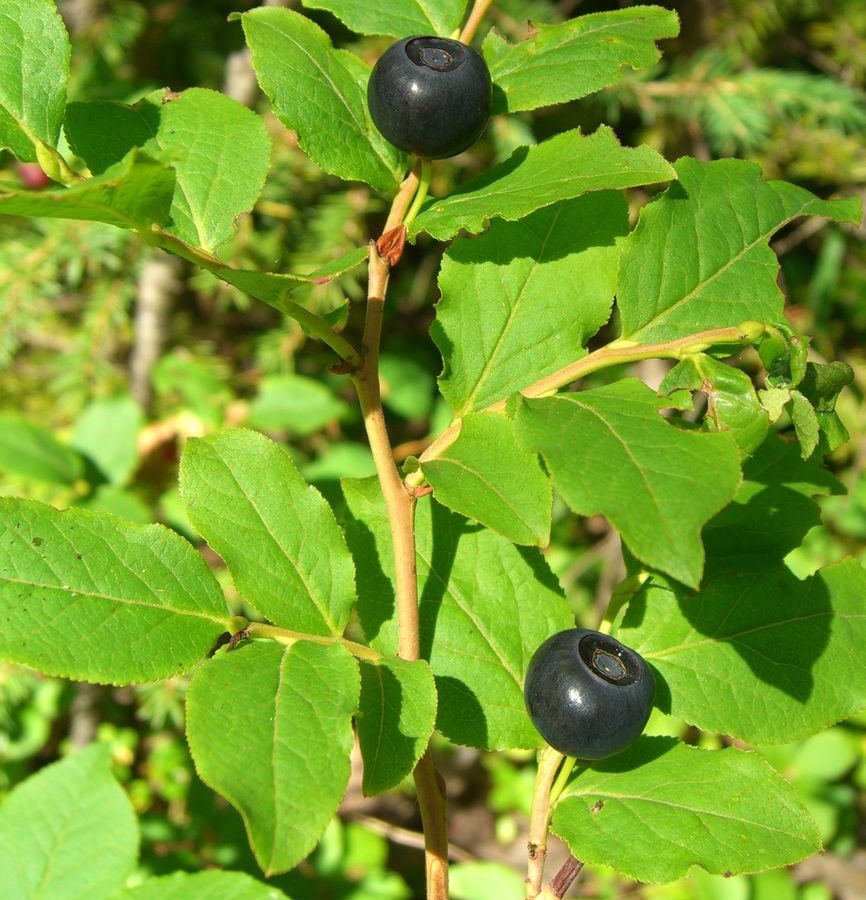
When: late July to September; August is the classic month, later at high elevation
Where: open subalpine slopes, roughly 1,000–1,800 m: Kootenays, Okanagan highlands, Interior ranges
Many British Columbians will tell you this is the best-tasting berry in the province: intense, dark, almost wine-like. The berries hang singly on the stem, blue-black to dark red. If you're climbing, you're in huckleberry country.
Blackberries, both of them
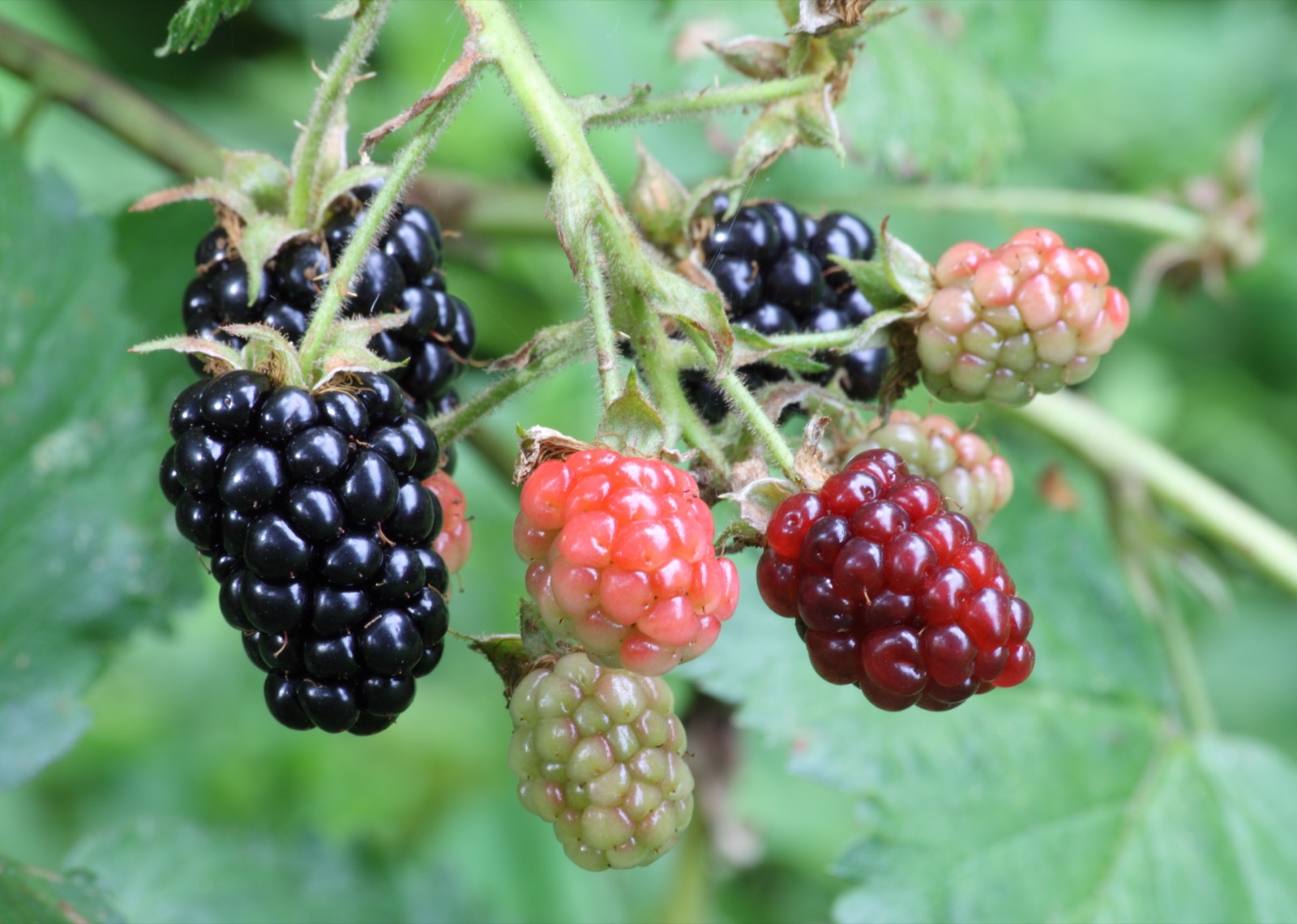
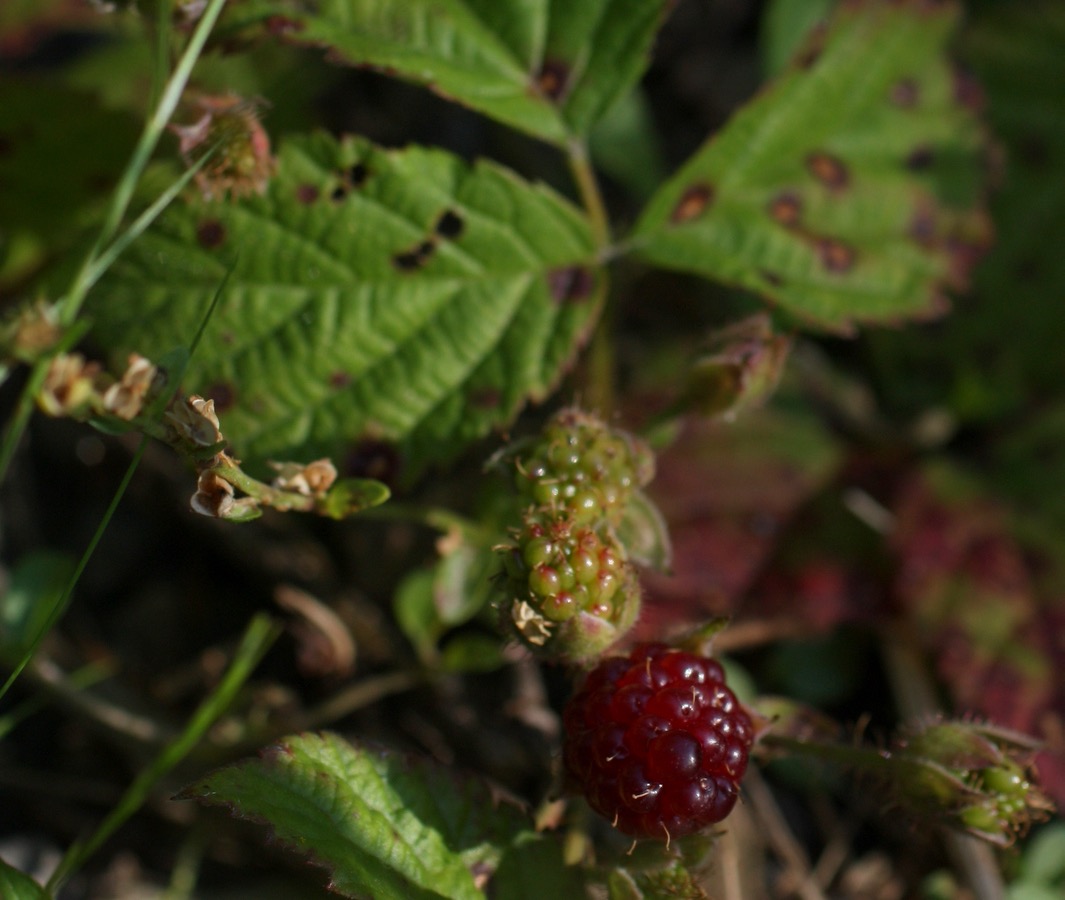
When: in season from midsummer into fall; late August is prime, and the Himalayan peaks into September
Where: low-elevation roadsides, rail-trail margins, and forest edges, coast to southern Interior
BC has two. The trailing blackberry (Rubus ursinus) is our native: a slender vine hugging the ground at forest edges, with small berries that beat the big ones on flavour. The Himalayan blackberry (Rubus armeniacus) is the introduced one, those towering, arching thickets that line low-elevation roadsides and rail trails from the coast to the southern Interior, famously crowding the Galloping Goose and Lochside trails near Victoria. Telling them apart is easy once you know the tells: Himalayan grows thick, ridged canes taller than you are, leaves in fives, and big plump berries; trailing stays at ankle height on thin stems with a whitish, waxy coating, leaves in threes, and smaller fruit. The Himalayan is officially an invasive plant, which means eating as many as we can hold is a public service.
Not actually from the Himalayas. The Himalayan blackberry has never been near the Himalayas. It's native to Armenia and northern Iran, and it got here through the famous California plant breeder Luther Burbank, who in 1885 grew seeds that had been shipped to him from India, so he called his prize new berry the "Himalaya Giant." By 1894 he was marketing it to growers in the damp Pacific Northwest, where it promptly hopped the garden fence. Within fifty years it had run the length of the Pacific coast, and today it's BC's most widespread invasive shrub, and in practice the most-picked wild berry in the province.
Salal
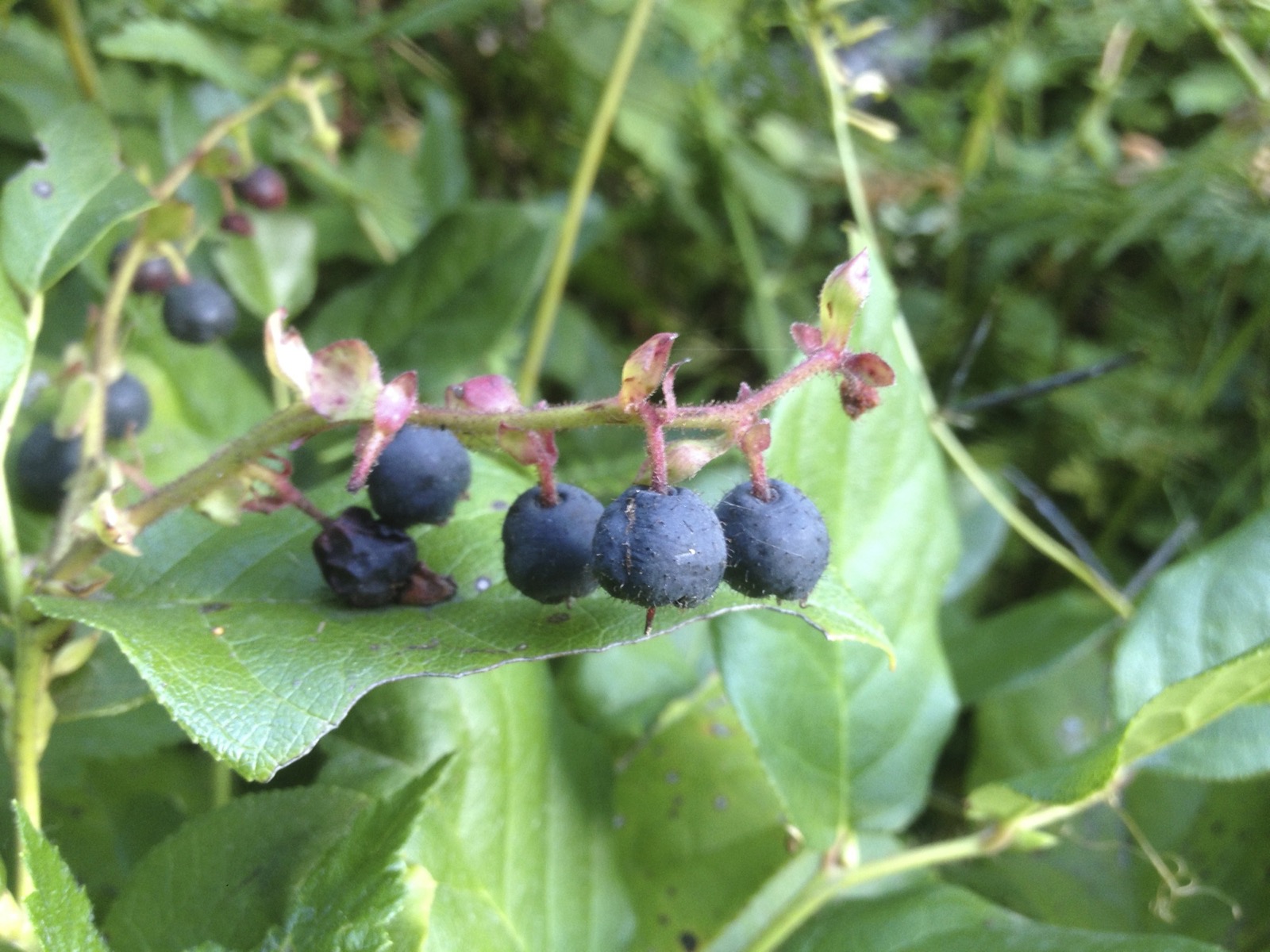
When: late July into September
Where: coastal forest understory and trail margins: Vancouver Island, Gulf Islands, Lower Mainland, north coast
The glossy-leaved shrub we've all ridden past a thousand times on any coastal route. The dark purple berries at the branch tips are ripe from late July into September. Eaten raw they're mild and a bit mealy; cooked into jam or syrup they're much better. Coastal First Nations have valued salal for a very long time, traditionally eating it fresh or drying it into cakes for winter.
Oregon grape
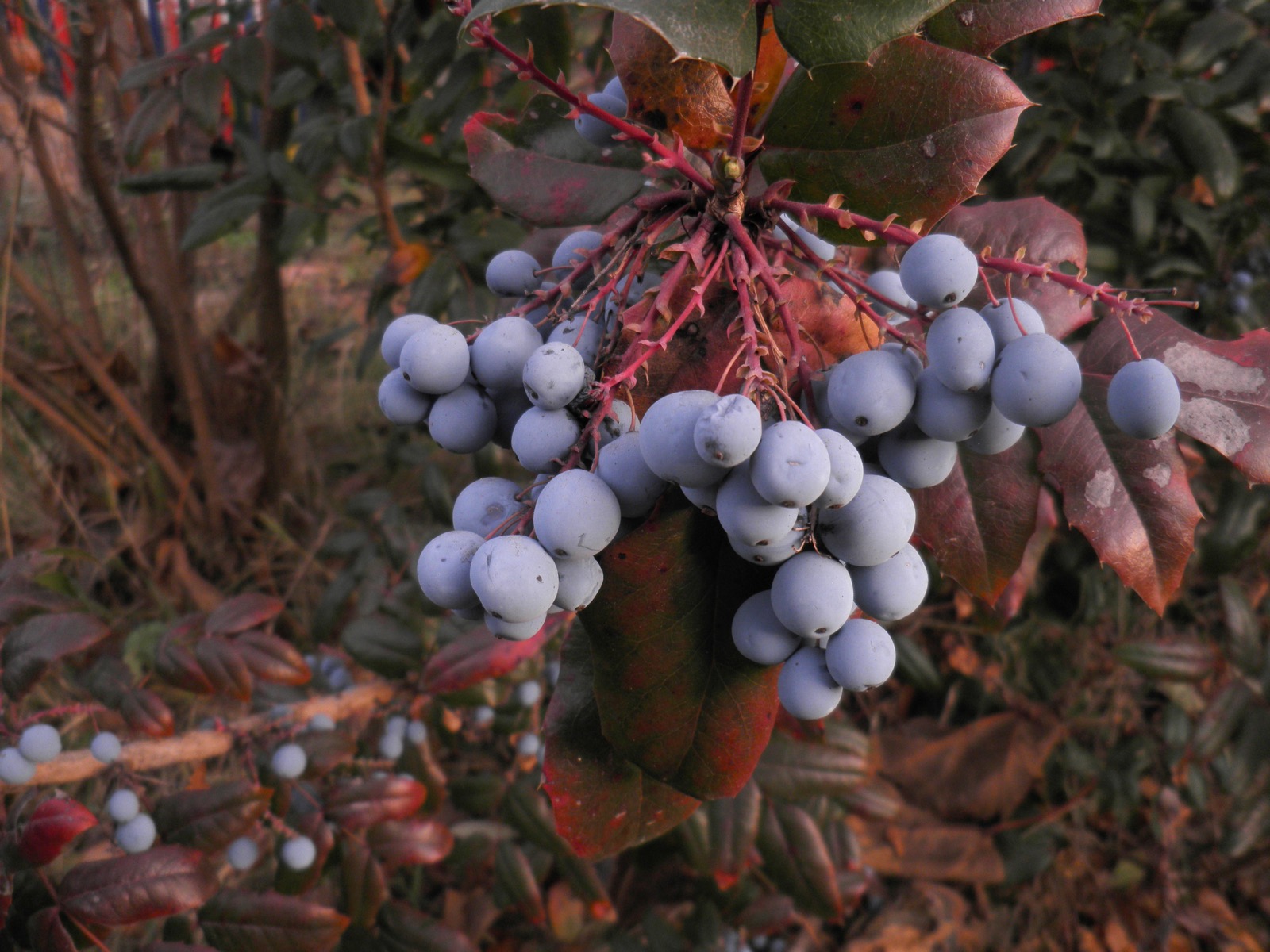
When: late June through August
Where: dry-to-moist forest understory and open slopes across southern BC
Holly-like spiny leaves, dusty-blue clusters, completely unmistakable. Perfectly safe, and comically sour raw: offer one to a riding partner and watch their face. Makes an excellent jelly for anyone willing to carry some home.
We just missed these: mark next year's calendar#
Salmonberry
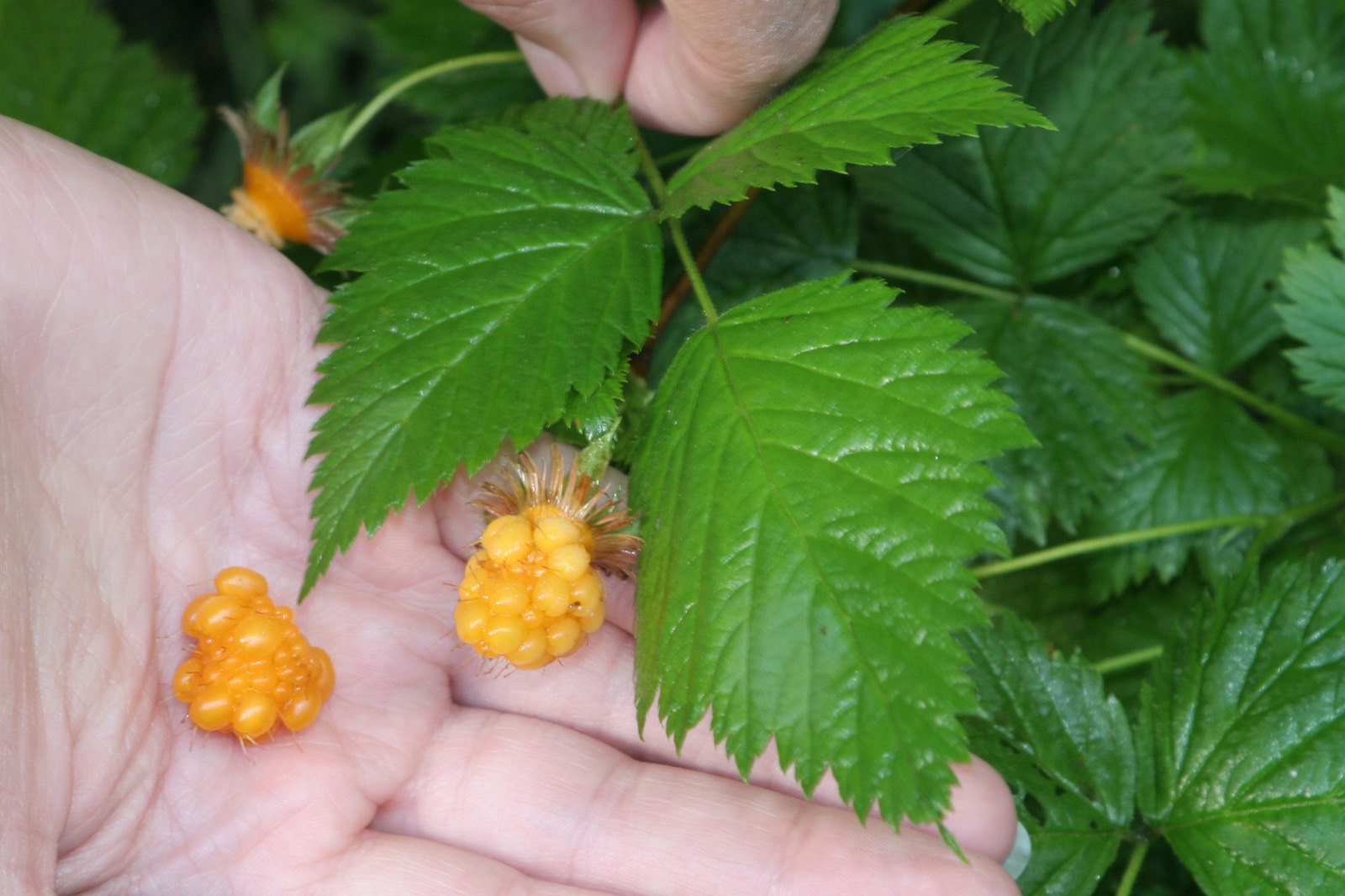
When: April through June, the first berry of the year
Where: moist coastal forest and streamside thickets
Raspberry-shaped berries in colours from gold through salmon to deep red, all edible at full ripeness, in wet coastal forest and streamside thickets.
Wild strawberry
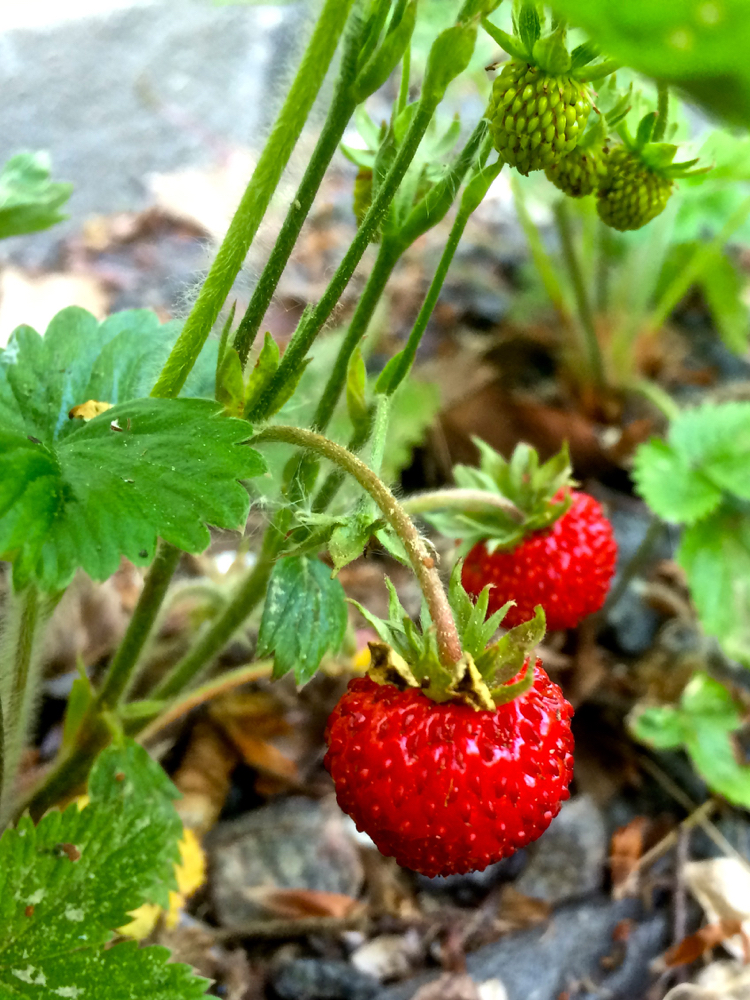
When: May to July
Where: meadows, roadsides, and forest edges, lowland to subalpine
Tiny, and better than anything in a store. Classic strawberry leaves in threes, miniature fruit, intense flavour.
Saskatoon
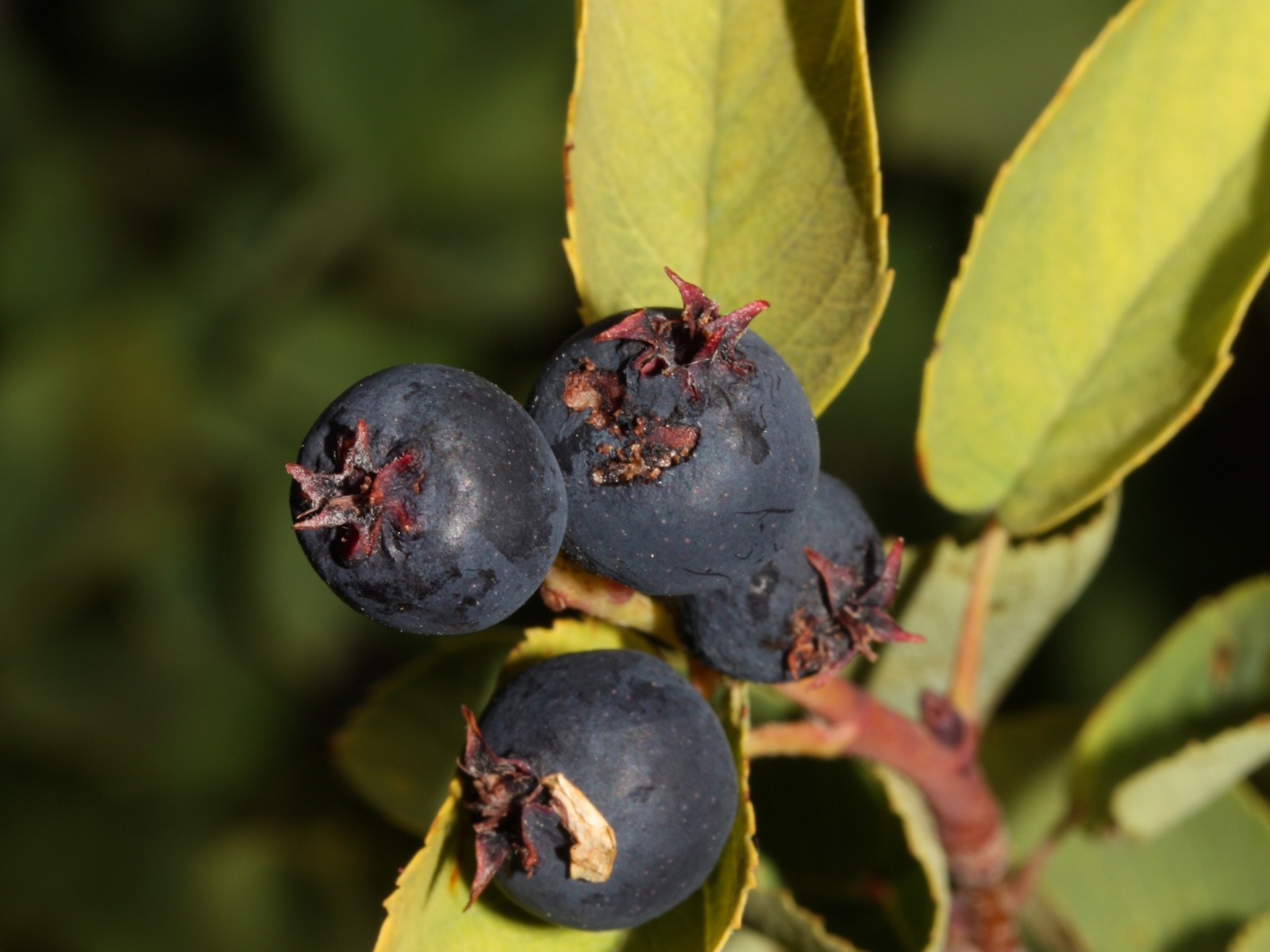
When: late June and July, a little later at elevation
Where: roadsides, open forest, and dry slopes; classic Okanagan cycling terrain
Sweet with a hint of almond, at home in dry Interior country. The saskatoon is also one of the most culturally significant foods in the region: in Syilx (Okanagan) tradition it is siya̟, one of the Four Food Chiefs, and the first ripening berries are honoured in ceremony before the harvest begins.
Thimbleberry
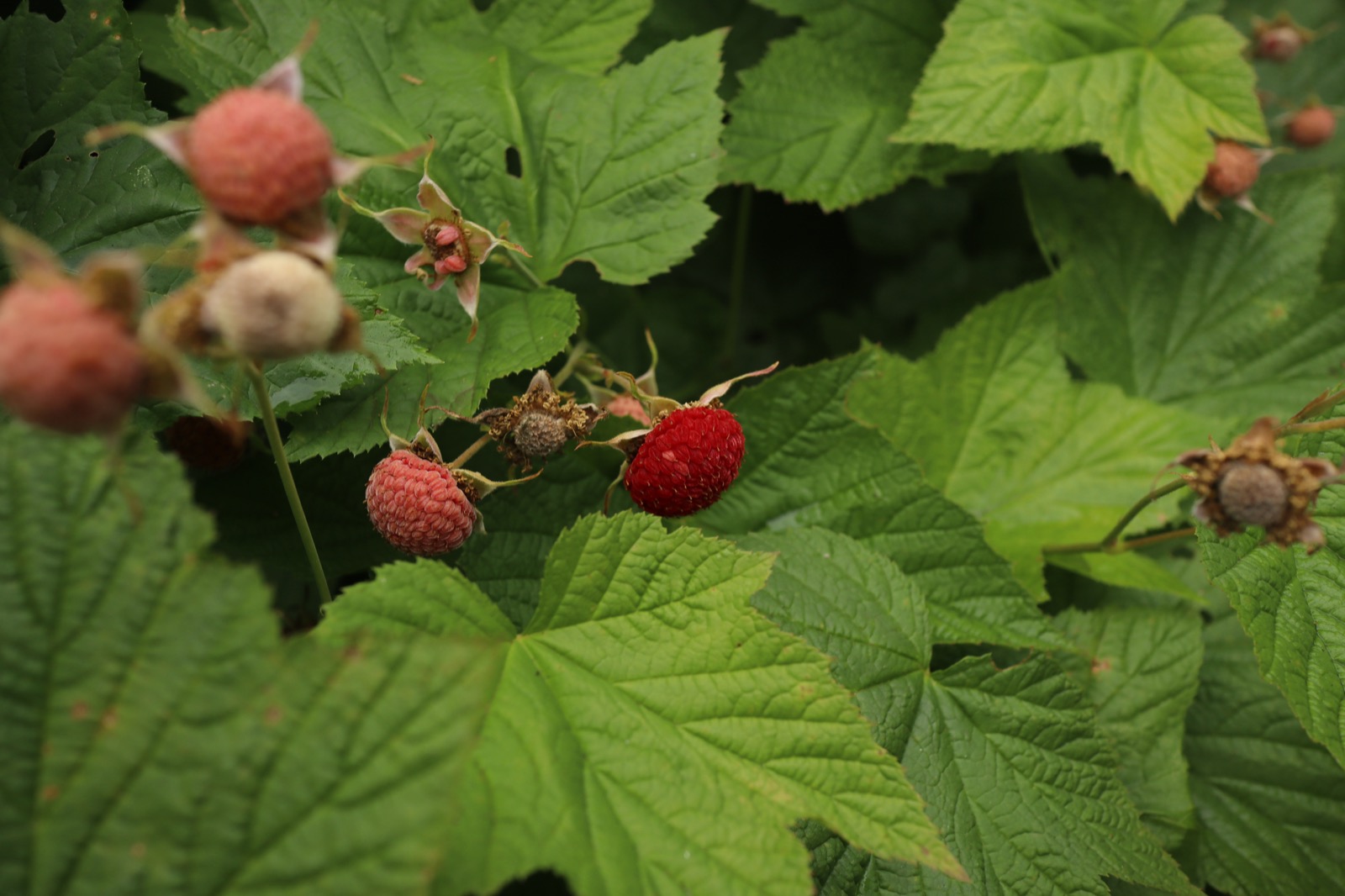
When: July into August
Where: cool, part-shade forest edges and clearings at low-to-mid elevation, province-wide
A soft red dome that slides off its core like a thimble. The trail's most fragile berry: eat it where you stand, because it will not survive a pannier.
Wait, can we pick here?#
Here's the part that surprised us: picking anything in a BC provincial park is prohibited by default, berries included. That has a very practical consequence for cyclists: the Myra Canyon trestles, the most famous stretch of the Kettle Valley Rail Trail, sit inside Myra-Bellevue Provincial Park. Perfect-looking huckleberry country.
Look, don't pick.
Outside the parks it's simpler. On provincial Crown land outside parks, which is much of BC's rail-trail and backroad riding, picking berries for personal use is generally permitted. On private land, ask first. On First Nations reserve land, don't forage without an invitation. Regional and municipal trails vary by operator, so check locally.
Forage like a guest#
Take a little, leave lots. Pick from several plants rather than stripping one, and remember we're sharing: berries are serious food for wildlife (huckleberries are a major late-summer food for grizzly bears in southeastern BC), and they're traditional foods for the people whose territories these trails cross. A handful for the ride is the right amount.
The tame side of the buffet#
Most of BC's berries aren't wild at all. This province grows about 95 percent of Canada's cranberries and is the largest highbush blueberry-growing region in the world. Abbotsford is the official Raspberry Capital of Canada, with the Fraser Valley producing most of the country's raspberries.
All of it is rideable. In September and October, the dyke trails of Richmond and Pitt Meadows pass flooded cranberry bogs: vast ruby-red lakes being corralled by harvesters, one of the best free spectacles in BC agriculture (Let's Go Biking's Cranberry Trail route rides right through it). From mid-July through August, u-pick blueberry farms run from Langley to Chilliwack, happy to top up a pannier. June is strawberry month, late June to July is raspberry time, and a farmers' market is a good excuse for a ride in any month.
Next April it starts over, with salmonberries on the wet coast. We've marked the calendar.
Sources: BC Parks, Responsible Recreation; Invasive Species Council of BC; The Tyee on the Burbank story; USDA black huckleberry plant guide; Sierra Club BC EcoMap; BC Cranberry Marketing Commission; Statistics Canada on BC highbush blueberries; Tourism Abbotsford. Berry photos: Wikimedia Commons contributors, credited under each image.